
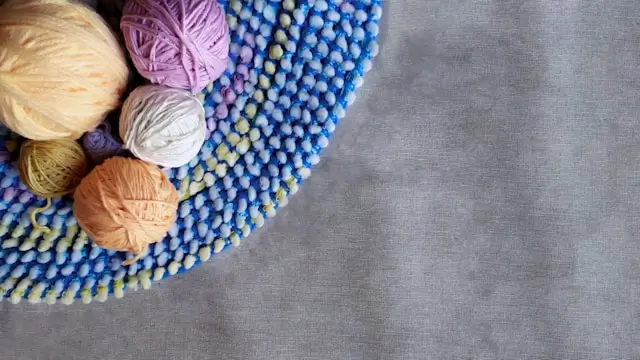
If you had told me a few years ago that the solution to a stubborn code bug could be found in a ball of yarn and a crochet hook, I probably would have laughed. Yet, as a web developer who spends countless hours in front of a screen, I’ve discovered that my most “analog” hobby—crochet—has taught me the most valuable lessons about the digital world of programming.
Many see crochet as just a hobby, a retro activity to pass the time. For me, it’s another form of architecture.
Whether I’m working on a new React component or finishing a cozy white cardigan (my current Work In Progress!), the mental process is surprisingly identical.
Here’s how two seemingly opposite worlds—the click of a keyboard and the rhythmic pull of yarn—connect through a shared philosophy.
1. The “Analog Break” as a Debugging Tool
Every developer knows the feeling: you’ve been staring at the screen for two hours, the stack trace makes no sense, and the tension is building up in your shoulders. My old reflex was to push through—keep typing, keep Googling, keep getting frustrated.
Now, when I hit a wall, I put down the keyboard and pick up my crochet hook.
The tactile sensation of the yarn provides a unique sensory break from the pixels. As my hands repeat rhythmic, familiar movements, my brain shifts from “Analytical Mode” into a state of Diffuse Thinking. It’s no coincidence that the solution to a complex logic flow often pops into my head right as I’m finishing a round on a coaster!
2. Patterns, Algorithms, and Object-Oriented Crochet
If you open a crochet pattern, you’ll notice something striking: it’s pure code.
Look at how a circle for a coaster begins:
[Row 1]: Ch 4, join with sl st to form a ring.
From the crochet pattern.
[Row 2]: Ch 3 (counts as first dc), 11 dc in ring. Join with sl st. (12 sts)
[Row 3]: Ch 3, dc in same st, 2 dc in each st around. Join with sl st. (24 sts)
In “Developer Speak,” this translates to:
// A simple stitch-increment algorithm
const initialRing = createRing();
let stitches = 12;

for (let row = 3; row <= targetRows; row++) {
    stitches = doubleStitchesCount(stitches);
    console.log(`Row ${row} complete. Total stitches: ${stitches}`);
}
In both crafts, we rely on:
- Loops: Repeating the same sequence of stitches (e.g., double crochet) until the end of the row.
- Conditionals: “If size is Medium, skip 2 stitches; else, skip 1.”
- Modular Design: My current cardigan WIP isn’t a single piece of fabric. It’s made of individual “granny squares” (modules). If one square has the wrong gauge, the entire structure (the layout) will fail during assembly (deployment).
3. The Art of “Frogging” (a.k.a. Refactoring)
In the crochet world, “frogging” means ripping out your work. It’s called that because the sound of yarn being pulled apart sounds like “rip it, rip it” (which sounds like a frog’s “ribbit”).
Frogging is the ultimate exercise in humility. Imagine you’ve crocheted 10 rows of a beautiful pattern, only to realize that back in Row 2, you missed a stitch. The shape is starting to warp.
You have two choices:
- Ignore it, hoping “no one will notice” (the equivalent of a “quick and dirty” bug fix that leaves technical debt).
- Take a deep breath, pull the yarn, rip out hours of work, and do it right.
Every time I “frog” a project, I’m training myself not to fear refactoring in my code. Accepting that going back to rewrite a block of logic isn’t a failure, but a commitment to quality, is perhaps the most liberating lesson a developer can learn.
4. Orange Slices vs. Mandalas: From Component Libraries to Custom UI
As I work on different projects, I notice a clear parallel in design dynamics:
- The Orange Slice Coasters: These are my “UI Component Library.” Small, identical, governed by strict rules and a steady flow. Once you learn the pattern, you can produce them quickly and with precision. It’s like building responsive grids with Flexbox.
- The Mandala Coasters: These are like a “creative custom landing page.” Every row features a different color, a different technique, and requires absolute focus. They keep you on your toes, forcing you to improvise and solve aesthetic problems on the fly.
| Feature | Orange Slice Coasters (Components) | Mandala Coasters (Custom UI) |
| Structure | Repetitive & Predictable | Dynamic & Exploratory |
| Focus | Low (Meditative Flow) | High (Active Problem Solving) |
| Result | Consistency & Systems | Uniqueness & Expression |
Conclusion: Code is Poetry, Craft is Logic
At the end of the day, creativity isn’t limited to the borders of a 14-inch screen. Whether we are holding a crochet hook or typing on a mechanical keyboard, we are Makers. We design, we test, we fail, we rip it out, and we build again.
The next time you feel stuck in front of a terminal, I suggest finding your own “analog” outlet. Whether it’s crochet, gardening, woodworking, or painting—let your hands create something in the physical world. You’ll find that your digital world becomes much brighter, cleaner, and… bug-free!
Do you have an “analog” hobby that helps you think better as a developer or creator? I’d love to hear about it! Reach out to me in the comments!
Leave a Reply