
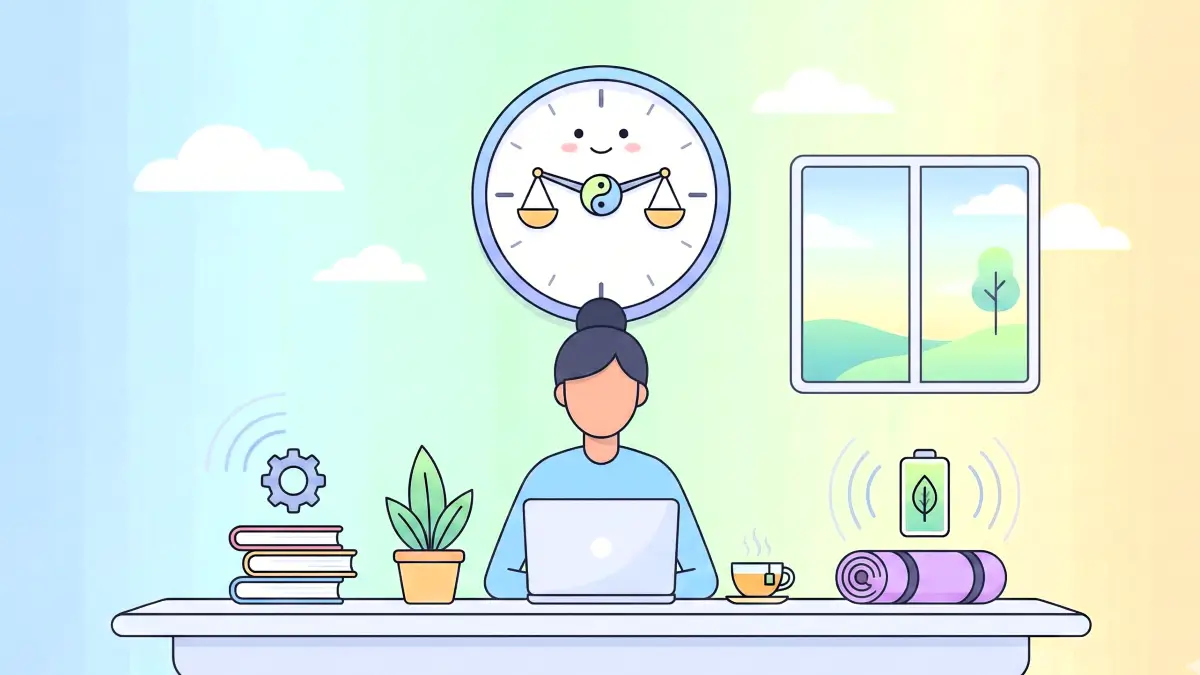
If you have been following my recent thoughts on The Art of Sustainable Ambition, you know that I believe success shouldn’t come at the cost of your health. While we have previously explored how Micro-Breaks lead to Macro-Benefits, today we are looking at the bigger picture. This guide brings together the ideas of smart goal-setting, community support, and emotional health to help you build a lifestyle that lasts. By connecting your daily habits to your long-term well-being, you can stay productive without losing your peace of mind.
Productivity and self-care are not enemies; they work together to create long-term success.
- Practicing self-kindness and mindfulness helps reduce the anxiety often caused by high workloads.
- The SMART method is essential for setting realistic goals that prevent you from feeling overwhelmed.
- Small habits, like the Pomodoro Technique and habit stacking, help build steady momentum.
- Taking intentional breaks is a proven way to refresh your brain and improve your focus.
- Recognizing the early signs of burnout allows you to take action before you feel completely drained.
- Building a supportive community and using time management tools like the Eisenhower Matrix can transform your workflow.
Understanding Productivity and Self-Care
In today’s world, people often think that productivity and self-care are opposites. Productivity is usually seen as the ability to get things done quickly, while self-care is about looking after your mental and physical health. However, thinking they are enemies is a mistake. To succeed in the long run, we need to understand a few key points:
- The Problem with “Being Busy”: Trying to do too much often causes stress. This leads to burnout and makes it harder to be creative.
- The Productivity Trap: If you only value yourself based on how much work you finish, you might lose your sense of joy and happiness.
- The Working Relationship: Managing stress and getting enough sleep actually helps you stay focused on your work.
- Health over Speed: When you take care of yourself, you can keep working well for a long time without getting sick or exhausted.
The Importance of Self-Kindness
Being kind to yourself means treating yourself with understanding when you fail, rather than being your own harshest critic. Research from organizations like the Greater Good Science Center shows that this habit greatly reduces work-related anxiety.
Ways to Be Kinder to Yourself:
- Mindfulness: Notice when you are thinking negative thoughts, but don’t judge yourself for having them.
- The “Friend Test”: Ask yourself: “Would I say these mean things to a friend?” Treat yourself with the same kindness you give to others.
- Changing Your Perspective: Instead of feeling like a failure when a project is hard, remind yourself that everyone faces difficulties.
- Writing Kind Notes: Write a short letter to yourself to remember your strengths when things get tough.
Setting Reachable Goals
The best way to avoid burnout is to set goals that you can actually achieve with the time and energy you have. The SMART method is a great way to do this:
- Specific: Be very clear about what you want to do (for example, “Write three pages” instead of “Work on my book”).
- Measurable: Use numbers to track your progress, like “working for two hours.”
- Achievable: Make sure the goal is realistic for your current life and skills.
- Relevant: Choose tasks that actually matter to your long-term plans and values.
- Time-bound: Give yourself a deadline so you don’t keep putting the work off.
Making Progress Step-by-Step
Staying motivated is about moving forward slowly but surely. Instead of trying to finish everything at once, use these simple techniques:
- The Pomodoro Technique: Work for 25 minutes, then take a 5-minute break. This keeps your brain fresh. You can read more about the official technique here.
- Habit Stacking: Attach a new habit to an old one. For example, do a quick stretch every time you finish your morning coffee.
- Celebrate Small Wins: Give yourself credit for finishing small tasks. This makes you feel good and helps you keep going.
- Keep a Simple Journal: Write down what you finished at the end of the day to see how much you are achieving.
Why Breaks and Recovery Matter
When work is busy, breaks are not a waste of time—they are necessary for your brain to recover. As I mentioned in my post about Micro-Breaks, even five minutes can change your entire day.
- Short Breaks (2–5 mins): These help you regain energy and find new ideas.
- Longer Breaks (30–60 mins): Stepping away for lunch is essential if you want to be productive in the afternoon.
- Mental Breaks: Do something that doesn’t require thinking, like staring out the window or stretching.
- Active Recovery: Activities like deep breathing, yoga, or a short walk help your body relax and lower your stress levels.
Recognizing the Signs of Burnout
It is important to notice when you are pushed too far. According to the World Health Organization, you should watch out for these common warning signs:
- Feeling Drained: You feel tired all the time and don’t have the energy to start your daily tasks.
- Work Becomes Harder: You struggle to focus on tasks that used to be easy for you.
- Negative Attitude: You start feeling annoyed or angry with your job, your boss, or your coworkers.
- Physical Changes: You might have trouble sleeping or lose interest in the things you usually enjoy.
Simple Self-Care Tips for Busy People
You don’t need a lot of free time to practice self-care. Try these quick ideas:
- Quick Movement: Take 5 minutes to walk or stretch a few times a day.
- Quiet Moments: Spend a few minutes drinking your tea or coffee without looking at your phone.
- Make Time for Hobbies: Set aside even 20 minutes a week for something you love, like reading or gardening.
- Stay Connected: Send a quick text or make a short call to a friend to keep your relationships strong.
- Sleep Better: Go to bed at the same time every night to make sure your brain gets the rest it needs.
The Power of Community
Having friends and helpful coworkers makes it much easier to avoid burnout. A supportive community helps you feel like you aren’t alone. This is a core part of practicing Sustainable Ambition.
- Networking: Join a group or a club where you can talk to people with similar interests.
- Mentorship: Find someone with more experience who can give you advice and support.
- Sharing Feelings: Talking about your stress with friends can make it feel much lighter.
- Teamwork: In a good community, people help each other with work so that no one has too much to do.
Better Ways to Manage Your Time
Beyond the SMART method, these four ideas can help you manage your energy and focus:
- The Eisenhower Square: Divide your tasks into “Important” and “Urgent.” You can learn how to prioritize using the Eisenhower Matrix here.
- Time Blocking: Put your tasks on your calendar like they are meetings.
- Energy Mapping: Figure out when you have the most energy. You can learn more about managing focus from resources like RescueTime.
- The 2-Minute Rule: If a task takes less than two minutes, do it right away.
Creating Your Own Plan
Your plan for being productive should change as your life changes. Follow these steps:
- Check: Every few weeks, look at your plan and change it if it isn’t working.
- Look: See where you are wasting time or getting too stressed.
- Add: Put breaks and self-care directly into your daily schedule.
- Ask: Talk to your friends or family for support when things are hard.
Summary
By looking after your health as much as your work, you can reach your goals without losing your happiness. True productivity is not about how much you can do in a single day, but how well you can perform over months and years. When you treat your well-being as a requirement rather than a reward, you build a sustainable foundation for your dreams. Remember that a rested mind is your most powerful tool, and by balancing effort with recovery, you ensure that your success is something you can actually enjoy when you reach it.
Leave a Reply